








Magnesium and Iron: Key Minerals for Health and Energy

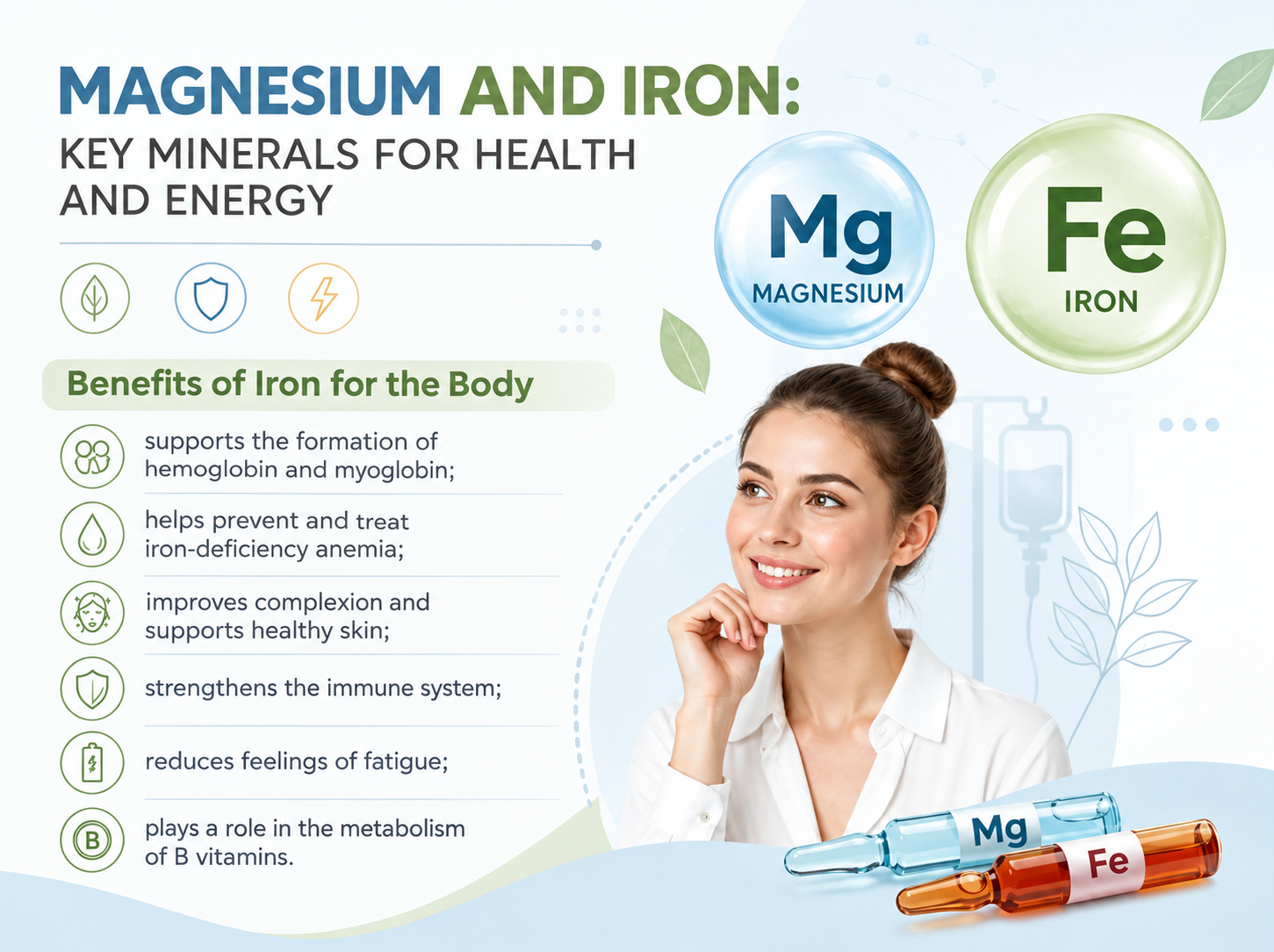
For the body to function properly, dozens of vitamins and minerals are required, among which magnesium and iron play a particularly important role. These nutrients are involved in essential biological processes, helping to maintain muscle and heart function, support oxygen transport, and sustain high energy levels.
Magnesium: An Essential Mineral for the Nervous System and Muscles
Magnesium is involved in regulating numerous processes within the body and influences the balance of other minerals and vitamins. For this reason, a magnesium deficiency can contribute to the development of broader nutrient deficiencies.
Healthcare professionals often recommend taking magnesium together with comprehensive vitamin and mineral supplements to help maintain an optimal balance of micronutrients.
Symptoms of Magnesium Deficiency
A lack of magnesium may present with the following symptoms:
- Muscle weakness
- Muscle cramps and spasms
- Tremors in the limbs
- Increased nervous excitability
- Irregularities in heart muscle function
If these symptoms occur, it is advisable to evaluate dietary habits and magnesium intake.
Can Magnesium Be Overdosed?
In individuals with normal kidney function, magnesium is generally considered a relatively safe mineral. However, excessive intake of magnesium supplements may cause adverse effects, the most common being a laxative effect.
Iron: The Foundation of Blood Formation
Iron is one of the most important trace elements in the human body. It is a key component of hemoglobin, the protein responsible for transporting oxygen to tissues and organs.
The adult human body contains approximately 4 grams of iron, most of which is involved in hemoglobin synthesis. Iron is transported through the bloodstream by a specialized protein known as transferrin.
One characteristic of iron is its relatively low absorption rate. On average, the body absorbs only about 8% of the iron obtained through food.
What Enhances Iron Absorption?
Effective iron absorption requires:
- Vitamin C
- Copper
- Cobalt
- Manganese
Vitamin C is particularly important because it converts iron into a form that is more easily absorbed by the body.
Benefits of Iron for the Body
Iron performs numerous vital functions, including:
- Supporting growth and development
- Participating in the production of hemoglobin and myoglobin
- Helping prevent and treat iron-deficiency anemia
- Improving skin complexion and supporting skin health
- Strengthening the immune system
- Reducing feelings of fatigue
- Contributing to the metabolism of B vitamins
Adequate iron intake is especially important for women, children, adolescents, and individuals exposed to increased physical demands.
Iron-Rich Foods
The main dietary sources of iron include:
- Pork liver
- Beef liver and kidneys
- Red meat
- Seafood
- Egg yolks
- Legumes
- Peanuts
- Asparagus
- Oatmeal
- Molasses
For improved absorption, iron-rich foods should be combined with sources of vitamin C, such as citrus fruits, berries, or bell peppers.
Daily Iron Requirements
Adults are generally recommended to consume between 10 and 18 mg of iron per day. For pregnant and breastfeeding women, iron requirements increase to approximately 18 mg daily.
An Important Rule for Combined Supplement Use
Certain forms of inorganic iron, such as ferrous sulfate, may negatively affect vitamin E. Therefore, iron supplements and vitamin E are recommended to be taken separately, with an interval of at least eight hours between doses.
Conclusion
Magnesium and iron play crucial roles in maintaining overall health. Magnesium supports the normal functioning of muscles, the nervous system, and the heart, while iron helps supply oxygen throughout the body and combats fatigue. A balanced diet and the proper use of supplements can help prevent deficiencies of these essential minerals, supporting sustained energy levels and overall well-being.